Physical Address
304 North Cardinal St.
Dorchester Center, MA 02124
Physical Address
304 North Cardinal St.
Dorchester Center, MA 02124

Amplifying African Entrepreneurs voices, one story at a time
Amplifying African Entrepreneurs voices, one story at a time
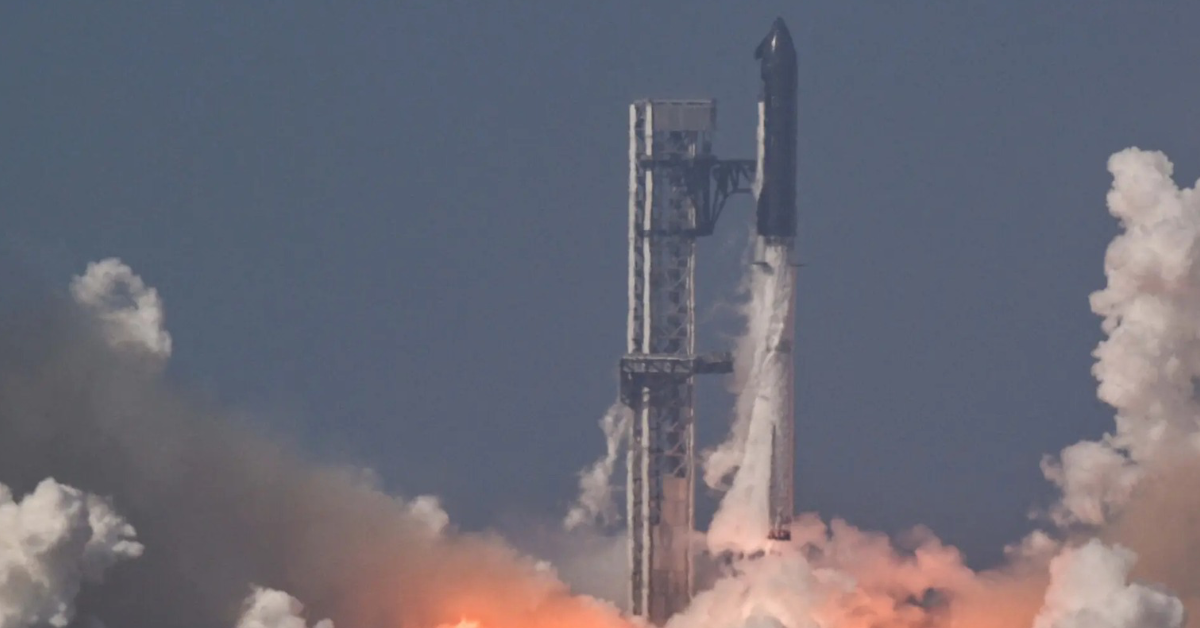
SpaceX has taken another giant leap toward the future of commercial space travel after its upgraded Starship rocket completed a largely successful high-stakes test flight ahead of the company’s anticipated historic IPO.
The latest launch drew global attention as investors, aerospace analysts, and technology enthusiasts watched closely from around the world.
Elon Musk’s space company launched the next-generation Starship V3 prototype from Starbase, Texas, marking the 12th Starship test flight since 2023 and one of the most important missions in the program’s history.
The massive rocket blasted off around 5:30 p.m. local time, lighting up the Texas coastline with the power of 33 roaring Raptor engines.
Minutes later, SpaceX achieved one of its major objectives when the Super Heavy booster separated cleanly from the upper-stage spacecraft during ascent.
Although one of Starship’s six engines failed during flight, the spacecraft still completed several critical tasks.
It deployed 20 mock Starlink satellites successfully and carried out a controlled atmospheric re-entry before splashing down in the Indian Ocean after more than an hour in flight.
The dramatic ending thrilled SpaceX engineers and employees who gathered to watch the livestream.
Starship descended nose-first as planned before tipping over into the sea and erupting into a fireball moments after landing.
Still, SpaceX considered the mission a major win because the company intentionally avoided recovery attempts for both the booster and spacecraft during this test.
The successful flight comes at a crucial moment for SpaceX.
Elon Musk reportedly prepares the company for a potentially record-breaking IPO next month that could value the aerospace giant at nearly $1.75 trillion.
If achieved, the listing would instantly become one of the largest public market debuts in global business history.
Starship remains central to Musk’s long-term ambitions. Beyond launching Starlink satellites more efficiently, the fully reusable spacecraft plays a key role in NASA’s Artemis moon missions and future Mars exploration plans.
Industry analysts say the latest mission strengthens investor confidence despite earlier Starship setbacks.
Kathleen Curlee, a research analyst at Georgetown University’s Center for Security and Emerging Technology, described the flight as another meaningful step in SpaceX’s broader strategy to expand launch capacity for future space operations.
SpaceX has invested more than $15 billion into Starship development.
Unlike traditional aerospace companies that often avoid high-risk testing, SpaceX embraces rapid experimentation.
The company repeatedly launches prototypes, studies failures, and upgrades designs quickly to accelerate innovation.
That aggressive approach has helped SpaceX dominate the commercial launch industry while building Starlink into one of the world’s fastest-growing satellite internet networks.
The new Starship V3 design introduces several powerful upgrades.
Engineers redesigned the Raptor engines to generate stronger thrust while reducing overall weight.
Additionally, the spacecraft now includes improved systems for orbital refueling, ship-to-ship docking, and long-duration missions beyond Earth orbit.
Those upgrades matter because NASA plans to use Starship for future Artemis lunar landings later this decade.
SpaceX secured a contract worth more than $3 billion under NASA’s Artemis program, placing the spacecraft at the center of America’s renewed race to return astronauts to the moon before China achieves its own crewed lunar mission goals.
Meanwhile, Musk’s long-term Mars ambitions continue to inspire global fascination.
Although the billionaire entrepreneur previously predicted an uncrewed Mars mission by 2026, industry experts now see that timeline as increasingly unrealistic due to the complexity of orbital refueling and deep-space travel technology.
Even so, Friday’s successful test flight signals that SpaceX continues moving closer to making reusable interplanetary travel commercially viable.
The mission also demonstrated the company’s growing confidence in Starship’s operational capabilities.
During re-entry, the spacecraft endured deliberate stress-testing maneuvers designed to push the vehicle close to its engineering limits.
Despite those extreme conditions, Starship completed its descent sequence intact before final splashdown.
For investors, that progress could prove critical ahead of the expected IPO.
SpaceX’s future revenue growth depends heavily on Starship’s success because the rocket will support massive Starlink expansion plans, deep-space logistics, and future orbital infrastructure projects.
As competition intensifies in the global space industry, SpaceX continues positioning itself as the dominant force shaping the next era of human exploration beyond Earth.