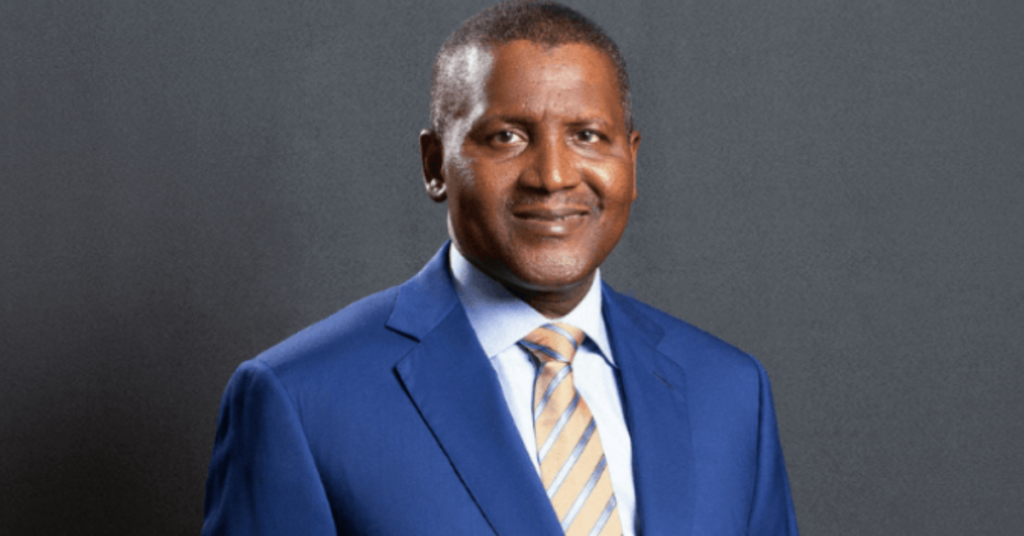
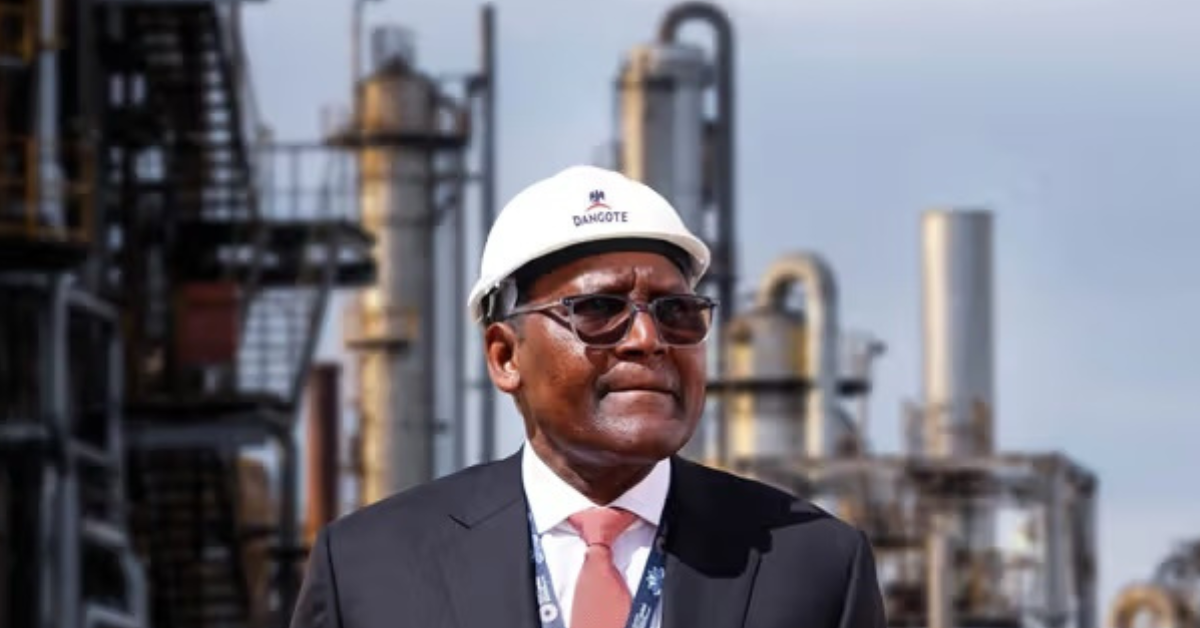
Africa’s richest man, Aliko Dangote, has suggested that his actual fortune is substantially larger than the figures currently reported by global wealth trackers, reigniting debate about how billionaire wealth is measured across emerging markets.
Speaking during a street interview with entrepreneur and School of Hard Knocks founder James Dumoulin, Dangote questioned the accuracy of publicly reported valuations that place his wealth between $31.6 billion and $35.6 billion.
The Nigerian industrialist argued that many of the most valuable assets within his business empire remain privately held and are therefore difficult for wealth-ranking organizations to fully assess.
When asked about the largest amount of money he had generated in a single year, Dangote offered a striking response.
“Well, first quarter, we did about $10 billion,” he said.
The billionaire also pushed back against widely circulated estimates of his fortune.
According to Forbes, Dangote’s net worth currently stands at approximately $31.6 billion, while the Bloomberg Billionaires Index places it closer to $35.6 billion. However, Dangote believes those figures do not capture the full scale of his holdings.
“They say I’m worth $38 billion, but most of our businesses are not listed yet,” he said. “It will come out soon.”
His remarks have drawn fresh attention to the structure of the Dangote Group, one of Africa’s largest industrial conglomerates.
While several of its businesses trade publicly—including Dangote Cement, Dangote Sugar Refinery and NASCON Allied Industries—some of its most valuable assets remain outside public markets.
At the center of that conversation is the Dangote Petroleum Refinery, widely recognized as the world’s largest single-train refinery.
The company’s fertilizer business also ranks among its most significant private assets and continues to strengthen the group’s industrial footprint across Africa.
Because these businesses are privately owned, analysts often face challenges when determining their exact market value. As a result, estimates of Dangote’s wealth vary considerably depending on the assumptions used by financial institutions and wealth-ranking agencies.
That valuation gap may soon narrow.
The Dangote Group is preparing what could become the largest initial public offering in African capital market history. Earlier plans focused on listing a portion of the refinery on the Nigerian Exchange.
However, the strategy has evolved into a broader and more ambitious vision that could see the company listed across multiple African exchanges, expanding access for investors throughout the continent.
Industry observers believe the move could mark a turning point for African capital markets. Rather than relying on a single domestic listing, the refinery could pursue a multi-exchange structure designed to attract regional and international investment.
The proposed offering is expected to include up to 10% of the refinery’s equity through the Nigerian Exchange Group, with a possible secondary listing on the London Stock Exchange. Market estimates currently place the refinery’s valuation between $25 billion and $30 billion.
If those projections hold, the transaction could raise between $2.5 billion and $3 billion in fresh equity capital. More importantly, it would establish a new benchmark for African IPOs and potentially become one of the most significant capital market events in the continent’s history.
The implications for Dangote’s personal wealth could be equally significant. Once publicly traded, the refinery would receive a transparent market valuation, making it easier for wealth trackers and investors to assess the true value of his ownership stake.

- Europe Backs Kenya’s Economic Rise with New Trade, Infrastructure and Digital Investment Push
- The $1.1 Trillion Wealth Comparison Shaking Global Economics
- AfDB’s $125M Move Could Reshape Africa’s Investment Future
- Kagame Says Truth Is ‘More Valuable Than an Apology’ as Macron Faces France’s Rwanda Genocide Legacy
- Mohammed Dewji’s $50-million-kenya-soft-drinks-plant-mo-cola