Physical Address
304 North Cardinal St.
Dorchester Center, MA 02124
Physical Address
304 North Cardinal St.
Dorchester Center, MA 02124

Amplifying African Entrepreneurs voices, one story at a time
Amplifying African Entrepreneurs voices, one story at a time
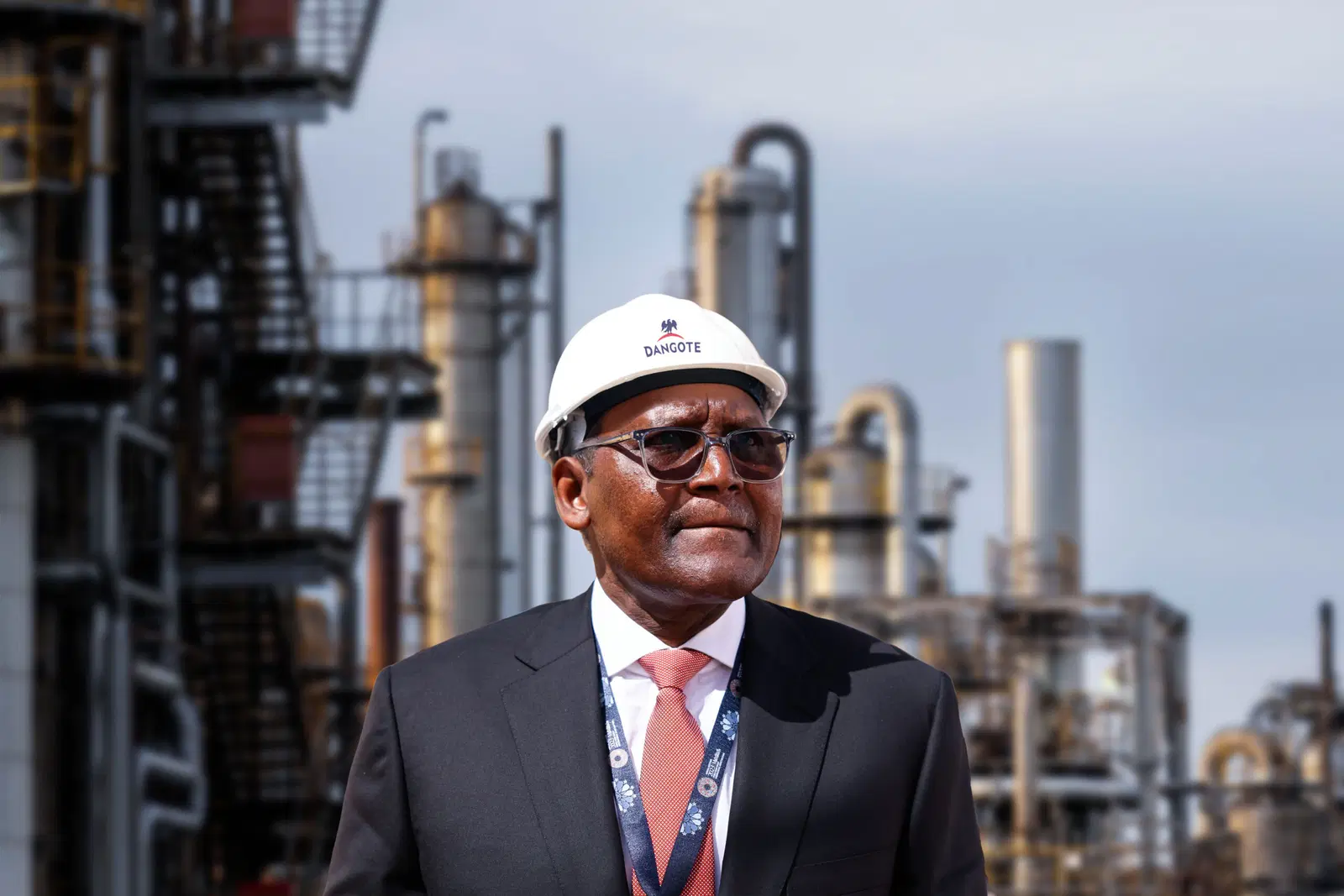
Nigeria’s economic recovery gained fresh momentum after global ratings agency S&P Global Ratings linked the country’s improving outlook to the growing impact of the Dangote Petroleum Refinery & Petrochemicals. The agency upgraded Nigeria’s sovereign credit rating from “B-” to “B,” pointing to stronger economic growth, rising oil production, better foreign exchange liquidity, and the rapid expansion of local refining capacity.
S&P revealed that Aliko Dangote’s refinery project has already begun feasibility studies to increase refining capacity from 650,000 barrels per day to nearly 1.4 million barrels per day. The proposed expansion could transform Nigeria into one of the world’s largest refining hubs while reducing the country’s dependence on imported fuel.
The ratings agency explained that the refinery’s operations have already started reshaping Nigeria’s balance of payments position. As the plant moves closer to full operational capacity, Nigeria continues to cut fuel imports, strengthen foreign reserves, and improve energy security across the country.
According to the report, the refinery now operates near its maximum refining capacity of 650,000 barrels per day. S&P stated that the development has significantly improved Nigeria’s current account position and reduced pressure on the naira. The agency also projected that Nigeria’s current account surplus could rise to 5.8 percent of GDP in 2026, compared to 4.8 percent in 2025.
Nigeria’s foreign exchange reserves have also recorded strong growth. S&P noted that reserves climbed from around $33 billion in 2023 to nearly $50 billion by early 2026. Analysts believe the decline in refined petroleum imports after the launch of the Dangote Refinery played a major role in that increase.
Beyond fuel production, the refinery has strengthened Nigeria’s industrial ambitions. The facility now supports the domestic supply of refined petroleum products, fertiliser, and gas while helping the country reduce exposure to global supply disruptions caused by geopolitical tensions in the Middle East.
S&P also linked Nigeria’s improving economic outlook to reforms introduced since 2023. Those reforms include exchange rate liberalisation, subsidy removal, improved petroleum revenue remittances, and stronger security operations in the Niger Delta aimed at boosting oil production.
The agency maintained that Nigeria’s economy will likely sustain steady growth despite inflationary pressure and structural challenges. Investor confidence has continued to improve as reforms reshape the oil sector and expand non-oil industries.
Economic experts say the planned 1.4 million barrels per day expansion could position Nigeria as a dominant exporter of refined petroleum products across Africa and global markets. The project also strengthens the country’s push toward industrialisation while creating opportunities for jobs, manufacturing growth, logistics expansion, and increased foreign investment.
The Dangote Refinery remains one of Africa’s biggest industrial projects and continues to attract global attention as Nigeria works to reposition itself from a crude oil exporting nation into a major refining and energy powerhouse.