Physical Address
304 North Cardinal St.
Dorchester Center, MA 02124
Physical Address
304 North Cardinal St.
Dorchester Center, MA 02124

Amplifying African Entrepreneurs voices, one story at a time
Amplifying African Entrepreneurs voices, one story at a time
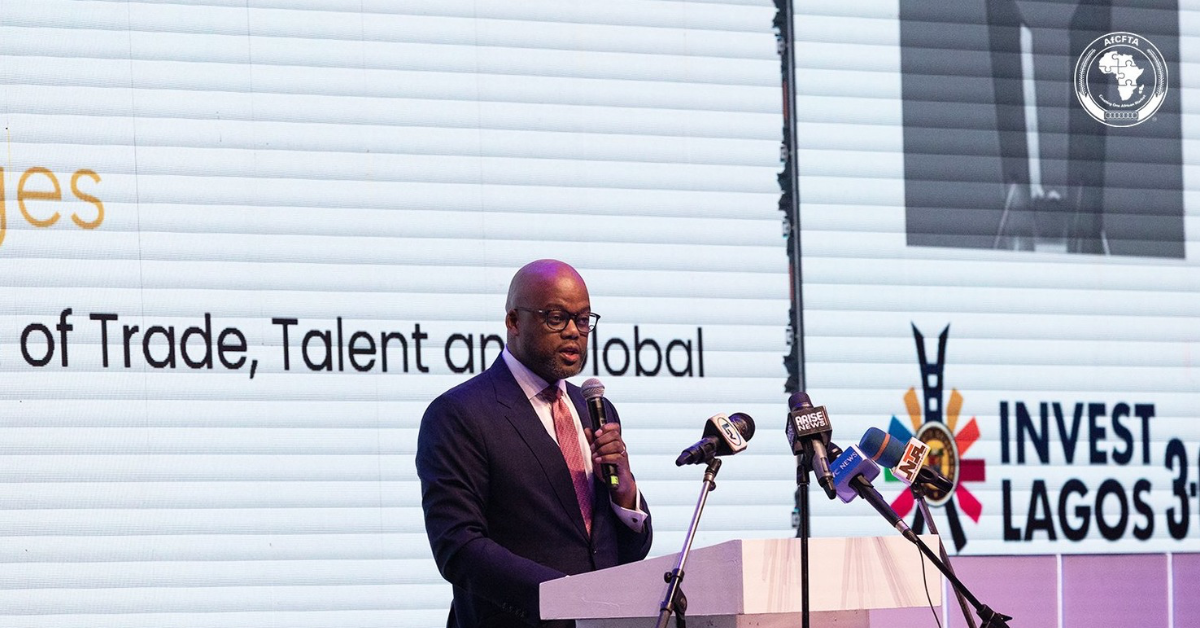
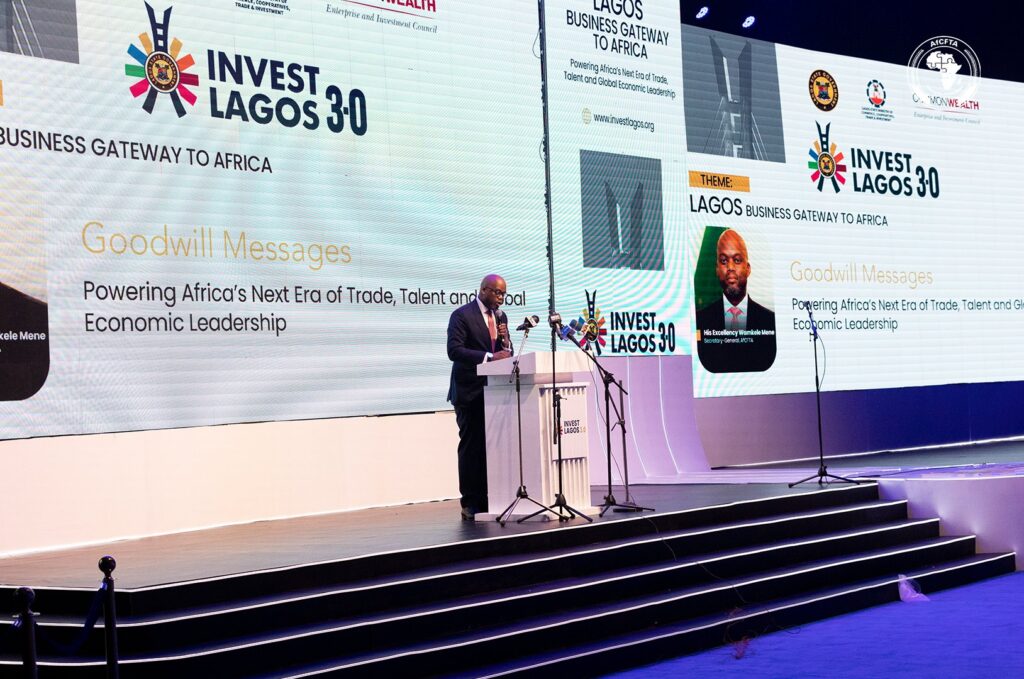
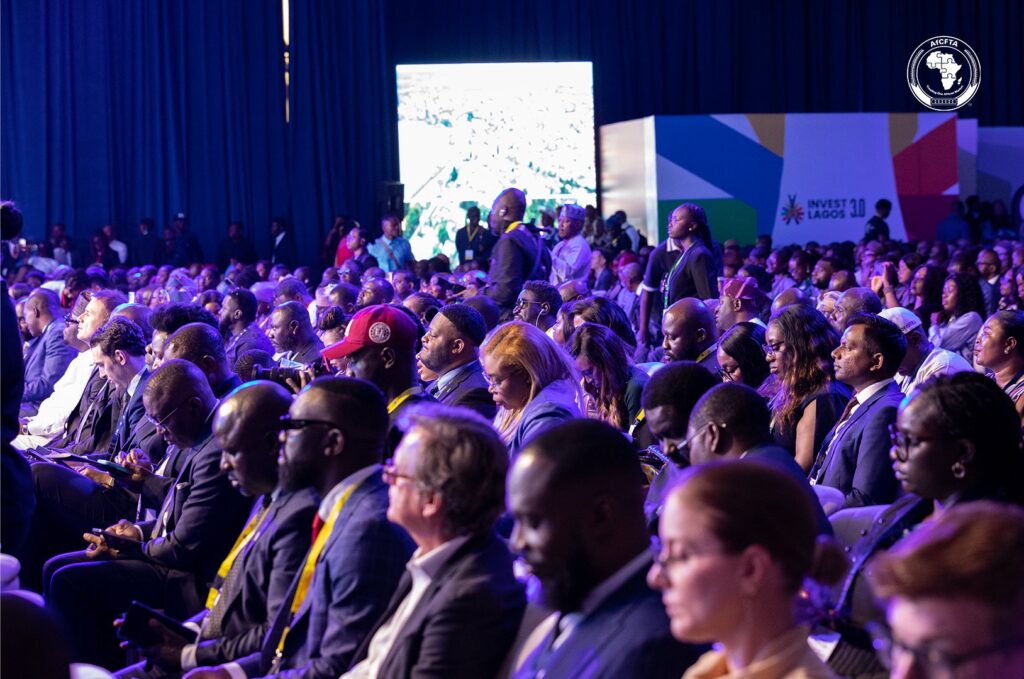
Africa’s ambition to become a global economic powerhouse took center stage at Invest Lagos 3.0, where policymakers, investors, business leaders, and trade experts gathered under the theme, “Lagos Business Gateway to Africa: Powering Africa’s Next Era of Trade, Talent and Global Economic Leadership.”
Among the most anticipated voices at the event was His Excellency Wamkele Mene, Secretary-General of the African Continental Free Trade Area (AfCFTA), who delivered a compelling vision of an Africa that trades more with itself, invests more in its industries, and reduces its dependence on foreign currencies to unlock economic growth.
Speaking during a panel discussion moderated by Samantha Cohen, CEO of the Commonwealth Enterprise and Investment Council, Mene argued that Africa’s economic future depends on strengthening intra-African trade and creating systems that allow businesses across the continent to transact seamlessly.
One of the most significant developments, he noted, is the growing ability of African businesses to trade without relying on the U.S. dollar. Through the Pan-African Payment and Settlement System (PAPSS), companies can increasingly conduct transactions in local currencies, making trade faster, more efficient, and less vulnerable to external currency pressures.
According to Mene, the shift represents a major milestone in Africa’s economic integration agenda. Rather than forcing businesses in countries such as Nigeria and Kenya to trade through a foreign currency, the system allows transactions to take place directly between local currencies while ensuring both parties receive payments in their domestic markets.
The initiative forms a key pillar of the AfCFTA’s broader strategy to create a truly connected African marketplace capable of competing on a global scale.
Beyond payments, Mene emphasized that manufacturing remains central to Africa’s long-term prosperity. He described Lagos as one of the continent’s most important industrial hubs, home to many entrepreneurs and manufacturers driving economic transformation across Africa.
However, he stressed that industrial growth requires more than ambition. African governments must continue removing trade barriers, simplifying customs procedures, harmonizing regulations, and improving cross-border logistics. These reforms would enable manufacturers to move products more easily from Lagos to Cairo, from Nigeria to Malawi, and across the broader African market.
Equally important is access to capital. Mene highlighted the critical role of African financial institutions in supporting industrial expansion and economic development. Organizations such as the African Development Bank, Africa Finance Corporation, Africa50, and Afreximbank possess the financial capacity to support transformative projects across manufacturing, infrastructure, logistics, and industrial development.
The combination of industrialization and digital transformation, he explained, has the potential to accelerate economic growth at an unprecedented pace. As African economies become increasingly digitized while expanding their manufacturing base, the continent can create jobs, boost productivity, and strengthen its position in global value chains.
That vision resonated strongly with business leaders attending the conference. Discussions throughout the event focused on how Africa can build resilient industries capable of serving a rapidly growing population while creating millions of employment opportunities.
The conversation also expanded beyond Africa’s borders to include the role of Commonwealth nations in supporting trade and investment growth across the continent.
Mene noted that global trade dynamics are changing rapidly. Traditional partnerships that once dominated international commerce are evolving as countries reassess supply chains, investment strategies, and economic priorities. In that environment, Africa presents a compelling opportunity for investors seeking growth, scale, and long-term returns.
He pointed to countries such as India as examples of how digital innovation can accelerate economic development. From digital identities to advanced payment systems, Africa can learn from successful models while developing solutions tailored to its own unique realities.
At the same time, Commonwealth countries including Australia and Canada are increasingly exploring opportunities across Africa as they seek to diversify trade relationships and reduce dependence on traditional markets.
Samantha Cohen observed that many businesses in these countries recognize Africa’s enormous potential but often lack the knowledge and networks needed to enter African markets effectively. She argued that institutions such as AfCFTA can play a vital role in bridging that gap and making it easier for international investors to engage with African opportunities.
Mene acknowledged that perceptions of risk continue to influence investment decisions involving Africa. Yet he argued that many of those perceptions no longer reflect the realities of the continent’s economic landscape. Investors often apply risk premiums that exceed actual market conditions, creating unnecessary barriers to capital flows.
Fortunately, Africa already possesses strong financial institutions capable of helping international investors navigate local markets. Organizations such as Afreximbank and Africa Finance Corporation understand the continent’s investment environment and can serve as trusted partners for global investors seeking exposure to African growth opportunities.
The discussion also highlighted the advantages of intra-Commonwealth trade. Existing relationships, shared legal frameworks, and historical connections create opportunities to deepen economic cooperation and unlock new investment channels.
Looking toward 2050, Mene offered a confident assessment of Africa’s future. He believes the continent is well positioned to double intra-African trade and build a globally competitive economic bloc. Achieving that goal, however, will require consistent implementation of agreed reforms, stronger infrastructure networks, increased trade financing, and greater private-sector participation.
For Mene, the coming decades represent more than a period of potential. They represent a window for action.
Africa has long been described as the continent of the future. By 2050, he argued, the conversation should no longer revolve around untapped potential. Instead, the focus should be on the results of opportunities successfully unlocked, industries fully developed, and a continent that has secured its place as one of the world’s most influential economic engines.
Invest Lagos 3.0 delivered a powerful message to global investors and policymakers alike: Africa’s future is not a distant possibility. It is already taking shape, and Lagos is positioning itself at the center of that transformation.
For investors, manufacturers, entrepreneurs, and governments searching for the next frontier of growth, the message from Lagos was clear—Africa is open for business, and the time to engage is now.